
Toyota Venza: Washer Nozzle(for Rear Side)
Components
COMPONENTS
ILLUSTRATION
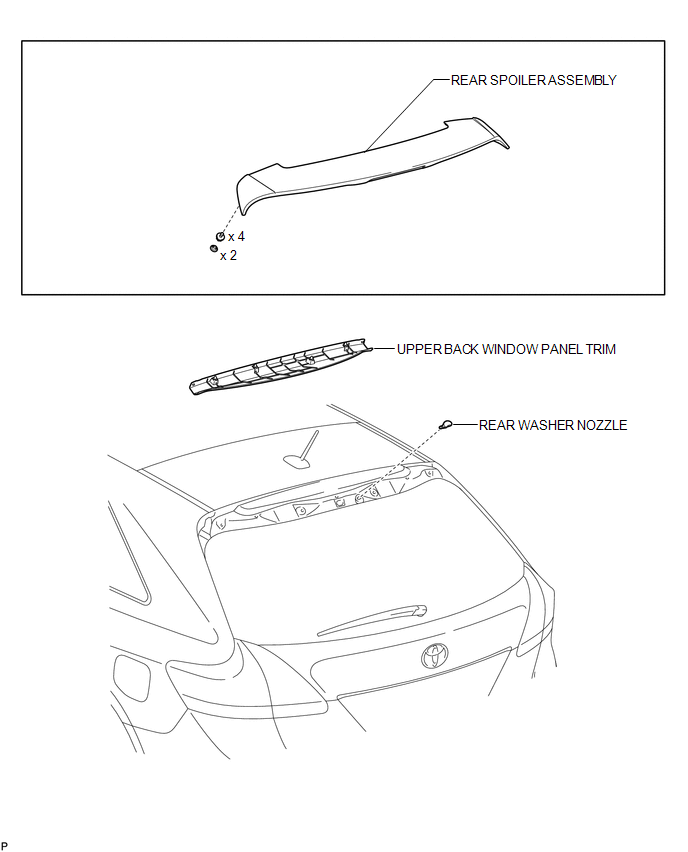
On-vehicle Inspection
ON-VEHICLE INSPECTION
PROCEDURE
1. INSPECT REAR WASHER NOZZLE
(a) With the engine running, check where the washer fluid hits the windshield.
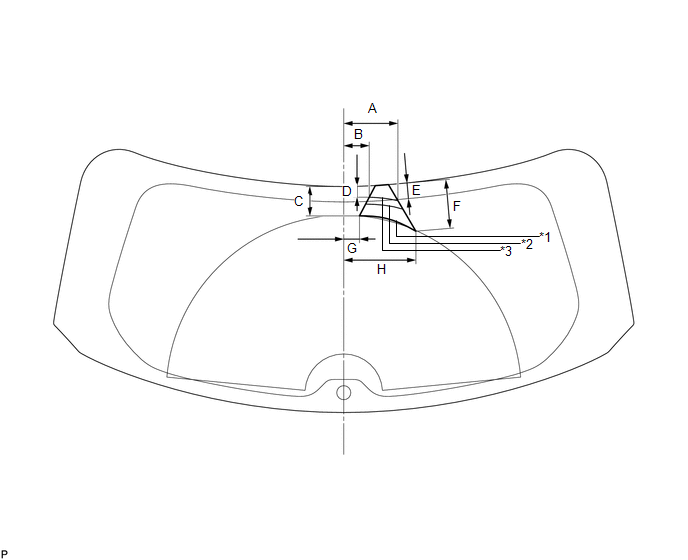 Standard Measurement
|
Area |
Dimension |
Area |
Dimension |
|---|---|---|---|
|
A |
134.4 mm (5.29 in.) |
B |
63.5 mm (2.50 in.) |
|
C |
75.4 mm (2.97 in.) |
D |
28.2 mm (1.11 in.) |
|
E |
38.1 mm (1.50 in.) |
F |
120 mm (4.72 in.) |
|
G |
38.7 mm (1.52 in.) |
H |
180.1 mm (7.09 in.) |
|
*1 |
Minimum Spray |
*2 |
Maximum Spray |
|
*3 |
Nominal Spray |
- |
- |
OK:
Washer fluid hits the windshield in the area shown in the illustration.
Adjustment
ADJUSTMENT
PROCEDURE
1. ADJUST REAR WASHER NOZZLE
|
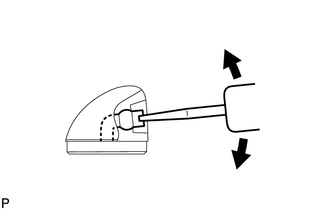
(a) Using a screwdriver, adjust the direction of the rear washer nozzle. NOTICE: Do not use a safety pin or other pointed tools. Doing so may damage the inside of the washer nozzle. HINT: Use a thin-bladed screwdriver with an approximately 1 mm (0.0394 in.) thick tip. |
|
Removal
REMOVAL
PROCEDURE
1. REMOVE UPPER BACK WINDOW PANEL TRIM
.gif)
2. REMOVE REAR SPOILER ASSEMBLY
3. REMOVE REAR WASHER NOZZLE
|
(a) Disconnect the washer hose. |
|
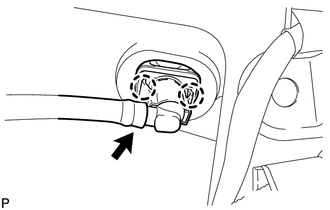
(b) Disengage the 2 claws and remove the rear washer nozzle.
Installation
INSTALLATION
PROCEDURE
1. INSTALL REAR WASHER NOZZLE
|
(a) Engage the 2 claws to install the rear washer nozzle. |
|
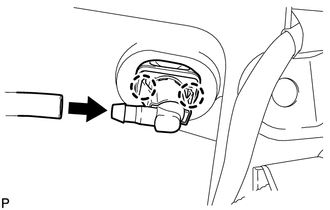
(b) Connect the washer hose.
2. INSPECT REAR WASHER NOZZLE
.gif)
3. ADJUST REAR WASHER NOZZLE
4. INSTALL REAR SPOILER ASSEMBLY
5. INSTALL UPPER BACK WINDOW PANEL TRIM
 Washer Nozzle(for Front Side)
Components
COMPONENTS
ILLUSTRATION
On-vehicle Inspection
ON-VEHICLE INSPECTION
PROCEDURE
1. INSPECT FRONT WASHER NOZZLE SUB-ASSEMBLY
(a) With the engine running, check that the center str ...

Other materials about Toyota Venza:
Brake fluid
- Checking fluid level
The brake fluid level should be between the “MAX” and “MIN” lines on the tank.
Make sure to check the fluid type and prepare the necessary items.
- Adding fluid
- Brake fluid can absorb moisture from the ...
Security Indicator Light Circuit
DESCRIPTION
The security indicator light blinks continuously due to a continuous signal received
from the transponder key ECU assembly while in the armed state.
WIRING DIAGRAM
CAUTION / NOTICE / HINT
NOTICE:
If the transponder key ECU assembly is repl ...
Removal
REMOVAL
PROCEDURE
1. REMOVE REAR DOOR SCUFF PLATE RH
HINT:
Use the same procedure for the RH side and LH side (See page
).
2. DISCONNECT REAR DOOR OPENING TRIM WEATHERSTRIP RH
HINT:
Use the same procedure for the RH side and LH side (See page
).
3. ...

0.1345